Deep Dive: T6C07
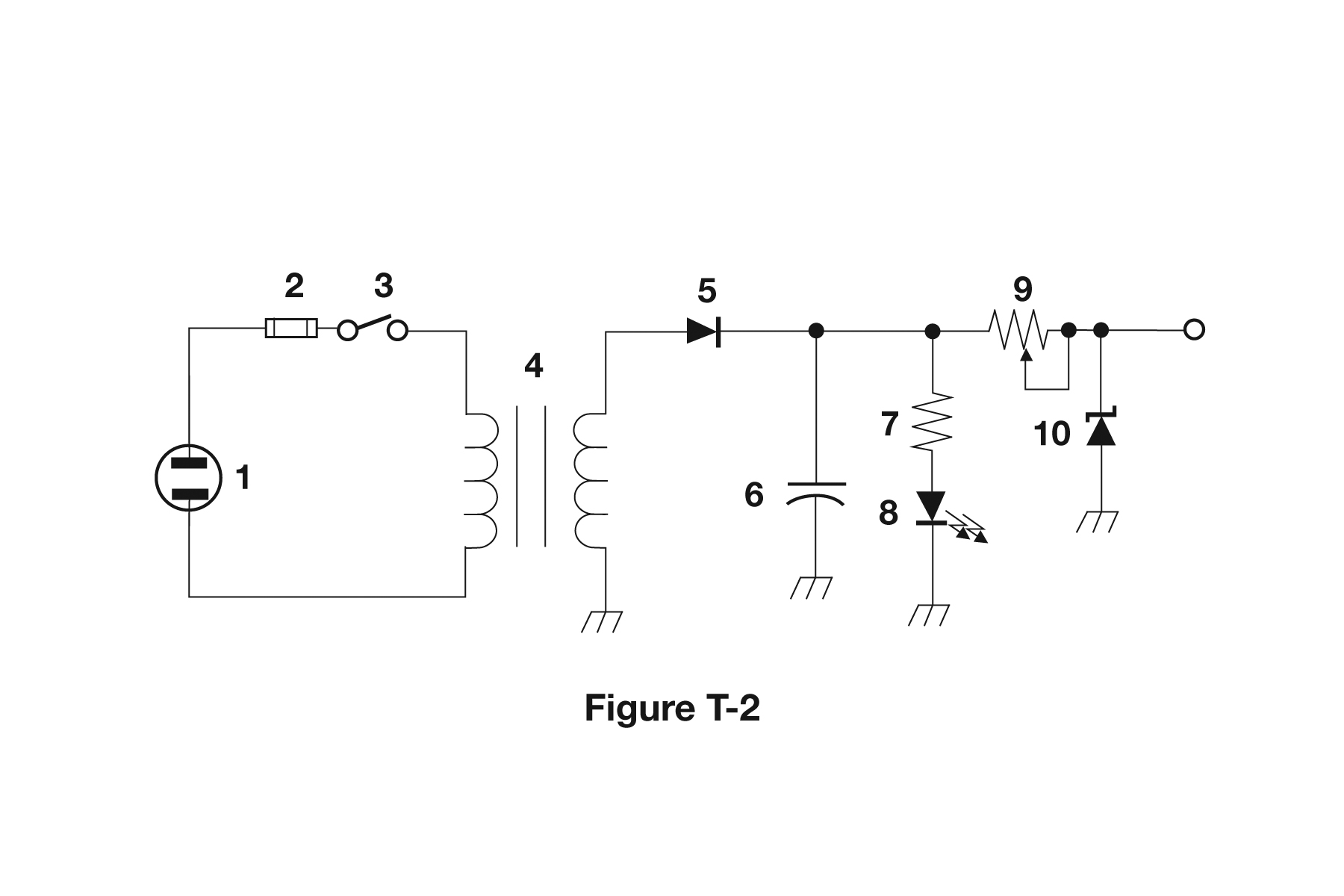
The correct answer is Light emitting diode (LED). Based on the schematic diagram in figure T-2, component 8 is a light emitting diode, identified by its standard schematic symbol showing a diode symbol (triangle with line) with arrows pointing outward, indicating light emission. LEDs are semiconductor devices that emit light when forward current flows through them. For amateur radio operators, LEDs are commonly used as status indicators, power-on lights, signal strength displays, and visual feedback in equipment. Being able to identify LEDs in schematics helps understand indicator circuits and troubleshoot non-functioning displays.
Why Other Answers Are Wrong
Option A (Resistor): Incorrect. Resistors are shown as zigzag lines or rectangles. Component 8 shows the LED symbol (diode with light arrows), not a resistor. Option B (Inductor): Incorrect. Inductors are shown as coils or loops. Component 8 shows the LED symbol with arrows indicating light emission. Option C (Regulator IC): Incorrect. Integrated circuits are shown as rectangles with multiple pins. Component 8 shows the LED symbol, which is a two-terminal device.
Exam Tip
LEDs are shown as diode symbols (triangle with line) with arrows pointing outward, indicating light emission. If you see a diode symbol with light arrows, it's an LED. Different from regular diodes (no arrows), resistors (zigzag), or inductors (coils).
Memory Aid
LED = diode symbol with light arrows. Think 'L'ED = 'L'ight 'E'mitting 'D'iode = diode with arrows showing light emission.
Real-World Example
In your transceiver's front panel, component 8 might be the transmit indicator LED. When you press PTT, this LED lights up to show you're transmitting. Understanding the LED symbol in schematics helps you trace the indicator circuit and troubleshoot if the LED doesn't work.
Source & Coverage
Question Pool: 2026-2030 Question Pool
Subelement: T6C
Reference: 2026-2030 Question Pool · T6 - Electrical components
Key Concepts
Official Pool Source
Question text and answer key are synchronized with the current NCVEC Technician Class pool and mapped to the T6C topic.