Deep Dive: E9B03
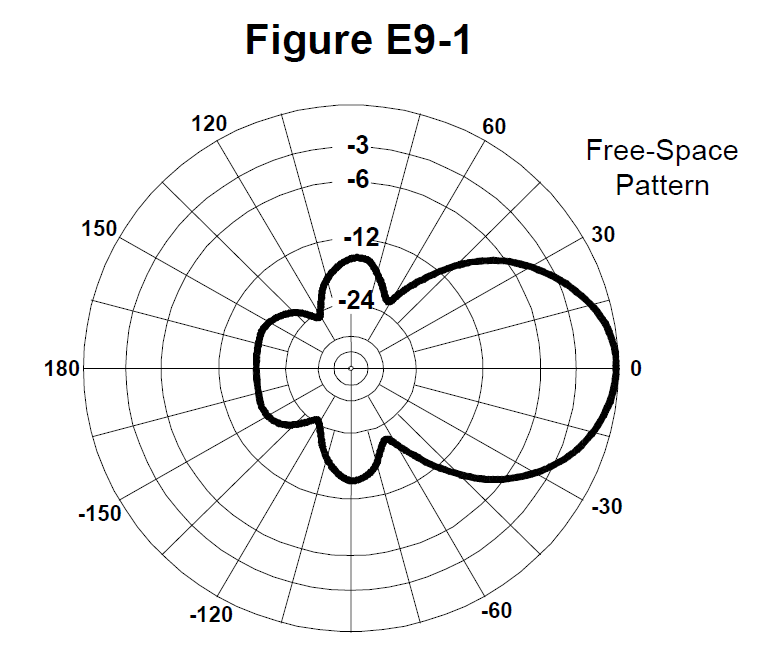
The correct answer is D: 14 dB. The front-to-side ratio of the antenna radiation pattern shown in Figure E9-1 is 14 dB. Front-to-side ratio is the difference in signal strength between the forward direction (main lobe) and the side direction (90 degrees from forward). Front-to-side ratio measures how well the antenna rejects signals from the sides. It's the difference between the forward signal strength and the signal strength at 90 degrees (perpendicular to the forward direction). A higher front-to-side ratio means better rejection of side signals. This is important for reducing interference from directions perpendicular to your main beam. The 14 dB ratio means the forward signal is 14 dB stronger than the side signal.
Why Other Answers Are Wrong
Option A: Incorrect. 12 dB is close but not the correct value from the figure. Option B: Incorrect. 24 dB would be too high. The front-to-side ratio is lower than the front-to-back ratio. Option C: Incorrect. 18 dB is the front-to-back ratio, not the front-to-side ratio. The side rejection is typically less than back rejection.
Exam Tip
Front-to-side ratio = Read from pattern. Remember: Front-to-side ratio is the difference between forward and side (90°) signal strength. For Figure E9-1, it's 14 dB.
Memory Aid
**F**ront-**T**o-**S**ide = **1**4 **d**B (think 'FTS = 14dB')
Real-World Example
You're analyzing an antenna pattern. The forward direction has maximum signal. At 90 degrees (perpendicular to forward), the signal is 14 dB weaker. This 14 dB front-to-side ratio means your antenna rejects signals from the sides by 14 dB, helping reduce interference from perpendicular directions.
Source & Coverage
Question Pool: 2024-2028 Question Pool
Subelement: E9B
Reference: FCC Part 97.3
Key Concepts
Official Pool Source
Question text and answer key are synchronized with the current NCVEC Extra Class pool and mapped to the E9B topic.