Deep Dive: E9B02
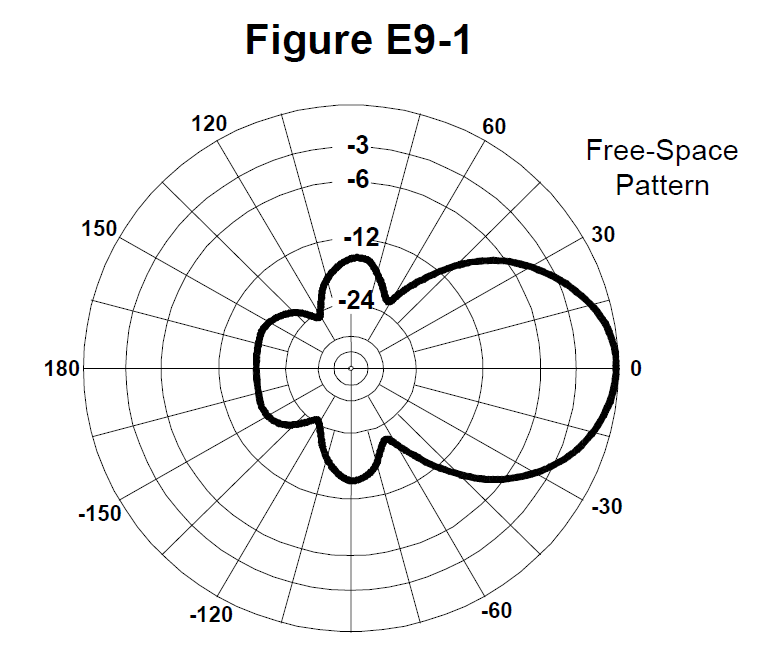
The correct answer is D: 18 dB. The front-to-back ratio of the antenna radiation pattern shown in Figure E9-1 is 18 dB. Front-to-back ratio is the difference in signal strength between the forward direction (main lobe) and the backward direction (180 degrees opposite). Front-to-back ratio is measured by comparing the signal strength in the main forward direction to the signal strength directly behind the antenna (180 degrees from forward). A higher front-to-back ratio means the antenna rejects signals from behind better. This is important for reducing interference from unwanted directions. The ratio is expressed in decibels - 18 dB means the forward signal is 18 dB stronger than the backward signal.
Why Other Answers Are Wrong
Option A: Incorrect. 36 dB would be too high for the pattern shown. The front-to-back ratio is lower than this. Option B: Incorrect. 14 dB is close but not the correct value from the figure. Option C: Incorrect. 24 dB would be higher than the actual front-to-back ratio shown in the pattern.
Exam Tip
Front-to-back ratio = Read from pattern. Remember: Front-to-back ratio is the difference between forward and backward signal strength. For Figure E9-1, it's 18 dB.
Memory Aid
**F**ront-**T**o-**B**ack = **1**8 **d**B (think 'FTB = 18dB')
Real-World Example
You're analyzing an antenna pattern. The forward direction has maximum signal. Directly behind (180 degrees), the signal is 18 dB weaker. This 18 dB front-to-back ratio means your antenna rejects signals from behind by 18 dB, which helps reduce interference from unwanted directions.
Source & Coverage
Question Pool: 2024-2028 Question Pool
Subelement: E9B
Reference: FCC Part 97.3
Key Concepts
Official Pool Source
Question text and answer key are synchronized with the current NCVEC Extra Class pool and mapped to the E9B topic.