Deep Dive: E7G11
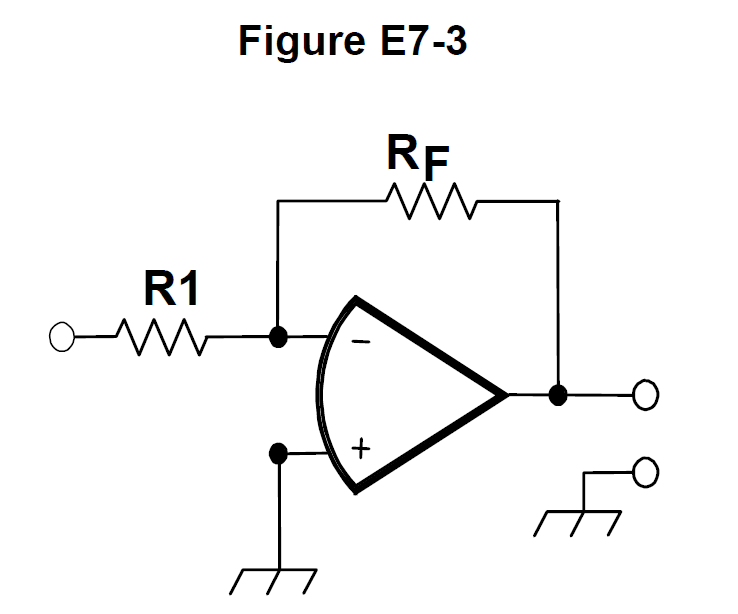
The correct answer is B: 14. For the inverting op-amp circuit in Figure E7-3, the absolute voltage gain is calculated as RF / R1 (the absolute value, ignoring the negative sign for inversion). With R1 = 3,300 ohms and RF = 47 kilohms (47,000 ohms): Gain = RF / R1 = 47,000 / 3,300 = 14.24, which rounds to approximately 14. The absolute gain is 14, meaning the output amplitude is 14 times the input amplitude (but inverted). This is a straightforward calculation: divide the feedback resistor by the input resistor.
Why Other Answers Are Wrong
Option A: Incorrect. 28 would be approximately 2 × 14, suggesting a calculation error or misreading of the resistor values. Option C: Incorrect. 7 would be approximately half of 14, suggesting a calculation error. Option D: Incorrect. 0.07 would be R1 / RF (3,300 / 47,000), which is the inverse of the correct formula.
Exam Tip
Absolute op-amp gain = RF / R1. Remember: For an inverting op-amp, absolute gain = RF / R1. With RF = 47kΩ and R1 = 3.3kΩ, gain = 47,000 / 3,300 ≈ 14.
Memory Aid
**A**bsolute **G**ain = **R**F / **R**1 (think 'AG = RF/R1' = Absolute Gain = RF divided by R1)
Real-World Example
You're designing an inverting amplifier with R1 = 3.3kΩ and RF = 47kΩ. The absolute voltage gain is 47,000 / 3,300 = 14.24, approximately 14. This means the output amplitude will be 14 times the input amplitude (but inverted in polarity).
Source & Coverage
Question Pool: 2024-2028 Question Pool
Subelement: E7G
Reference: FCC Part 97.3
Key Concepts
Official Pool Source
Question text and answer key are synchronized with the current NCVEC Extra Class pool and mapped to the E7G topic.